

More Than a Speech
WASHINGTON — Some moments inside the U.S. Capitol pass like routine ceremony. Others linger.
What unfolded during the recent State of the Union address was not simply another segment on a political program. It was a pause — the kind that cuts through division and reminds a watching nation what unity can look like.
For a few minutes, party lines blurred. Phones lowered. Conversations stopped. And an entire chamber stood in recognition of something larger than policy.
It wasn't about legislation.
It was about courage.
A Soldier Still Healing
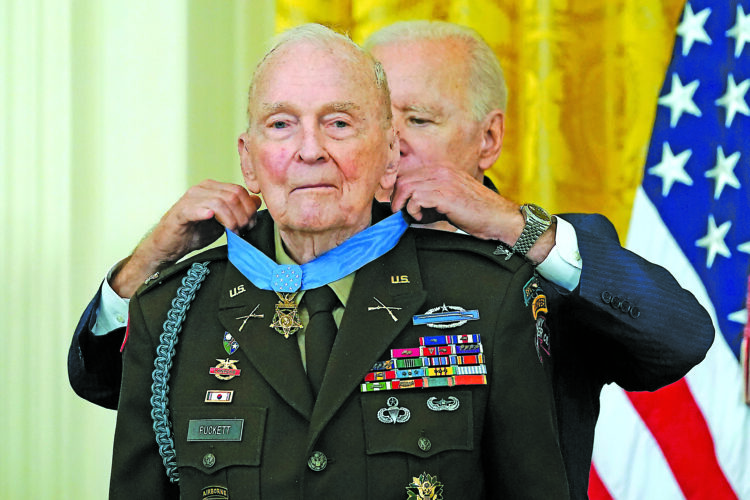
Army Chief Warrant Officer 5 Eric Slover entered the chamber without fanfare. Those unfamiliar with his story may have seen only a uniform and decorations. But behind the quiet composure was a mission that few Americans had heard about — and wounds that were still healing.
According to officials, Slover sustained life-threatening injuries during a high-risk helicopter operation. Despite repeated strikes and intense conditions, he continued flying, ensuring the safety of his crew and helping carry the mission through to completion.
When his name was announced, the reaction was immediate.
Lawmakers rose. Applause surged across the room. It wasn't the restrained clapping often reserved for ceremonial acknowledgments. It was sustained, emotional — the kind that reflects both gratitude and disbelief at what one person endured.
For many watching at home, the image was striking: a man who had faced danger without hesitation now standing quietly as the country recognized his resolve.
He did not wave dramatically. He did not gesture.
He simply stood there.
A Century of Service Remembered
If Slover's presence reflected modern sacrifice, the introduction of retired Navy Captain E. Royce Williams bridged generations.
At 100 years old, Williams represents a living connection to one of the most intense chapters of 20th-century warfare. During the Korean War, he flew in what historians have described as one of the most extraordinary dogfights of the conflict — facing overwhelming odds and successfully downing multiple enemy aircraft.
For decades, much of that story remained classified.
Recognition came slowly. Quietly. Without spectacle.
But inside the Capitol chamber, as Williams stood, supported yet steady, history felt present. Applause rose again — this time layered with the weight of time itself. Some lawmakers wiped their eyes. Others nodded solemnly.
Seven decades after the battle that defined his legacy, he received a public acknowledgment that many believed long overdue.
It was not a dramatic exchange. There were no lengthy remarks.
Just respect.
When the Room Stood Still

Observers inside the chamber described something difficult to quantify but impossible to miss: a shift in tone.
The noise softened. The usual political energy gave way to reflection.
Moments like these rarely dominate headlines, yet they resonate deeply. They remind viewers that beyond debate and disagreement, there exists a shared understanding of service.
It was the kind of scene that felt almost cinematic — though not in a theatrical way. More in the quiet, steady way of a story told honestly.
Some viewers later described the atmosphere as reminiscent of a George Strait ballad — not flashy, not dramatic, but grounded in sincerity. Strait's music often honors everyday strength, the kind carried without boasting. And in that chamber, the parallels felt natural: real men, real sacrifice, no need for spectacle.
Standing Ovations That Meant Something
Standing ovations in Washington are not uncommon. They often follow applause lines and policy points. But this felt different.
It was not prompted by rhetoric.
It was prompted by reality.
Eric Slover's continued recovery and Royce Williams' century-long journey represent different chapters of the same national story. One is still healing from recent wounds. The other carries memories from a war fought generations ago.
Together, their presence underscored a throughline of service that stretches across decades.
And for viewers across the country — regardless of political perspective — the message was clear: courage endures.
Why It Resonated Beyond the Chamber
In an era of rapid headlines and polarized discourse, moments of shared admiration stand out. Social media reactions that followed focused less on political analysis and more on gratitude.
Veterans groups expressed appreciation for the public acknowledgment. Military families shared personal reflections. Some described watching with their children and explaining what sacrifice means.
It was, for a brief time, a reminder of common ground.
The imagery was powerful not because it was choreographed, but because it was authentic. A wounded soldier standing tall. A centenarian veteran finally recognized.
Two lives separated by decades — united by service.
A Reminder of What Endures

As the address continued and the chamber returned to its usual rhythms, the emotional weight lingered.
These were not fictional heroes or scripted tributes.
They were living reminders of risk taken, responsibility accepted, and duty fulfilled.
In a nation often defined by its disagreements, the recognition of service remains one of the few threads that consistently draws collective respect.
And perhaps that is why the moment felt so lasting.
It wasn't about politics.
It was about people.
About sacrifice that does not demand attention — yet deserves it.
About courage that does not announce itself — yet changes lives.
For those watching, the images will likely endure: a soldier still healing, a veteran a century old, and a chamber — divided in many ways — united, if only briefly, on its feet.