

In the world of country music, surprises are usually planned. Releases are teased, rollout schedules are calculated, and emotional moments are often packaged for maximum impact. But every so often, a story emerges that doesn't feel manufactured at all—something so personal and so haunting that it stops people mid-scroll.
That is exactly what has happened with a viral narrative circulating among fans: an alleged, never-before-heard duet between Blake Shelton and his mother, discovered years later and released under the title "I'm Still Here."
The story has sparked intense emotional reactions online, with listeners describing the song as "a voice from heaven" and "a reunion beyond time." Whether taken as a literal discovery or as a deeply moving concept, the idea has struck a chord with country audiences for a reason: it taps into the heart of what the genre has always been about—family, memory, faith, and the longing to hold on to the people who shaped us.
A "Lost Recording" That Captivated Fans Overnight
According to the story being shared, the recording was found on a dusty reel-to-reel tape tucked away in old Nashville archives—one of countless forgotten artifacts from past decades of studio sessions and family recordings. The tape was reportedly mislabeled, stored away, and assumed lost forever.
When it was finally played back, the voices that emerged were instantly recognizable to anyone who has followed Shelton's career. His signature baritone—warm, grounded, and unmistakably shaped by Oklahoma roots—appears alongside a second voice: his mother's, described by fans as gentle, pure, and gospel-leaning.
The claim is that the two voices blend so naturally that it feels less like a duet and more like a private moment accidentally preserved for the world to hear.
In an industry built on performance, the emotional impact of the narrative comes from the opposite: the sense that this wasn't meant to be public at all. It sounds, fans say, like something recorded for family, not for charts.
The Song Title: "I'm Still Here"
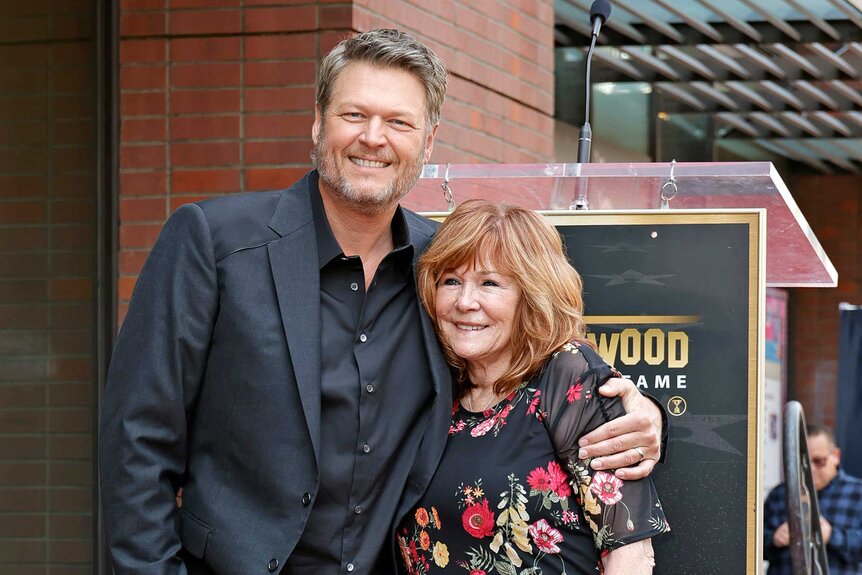
The track's reported title, "I'm Still Here," is a major reason the story has gained traction. The phrase carries obvious emotional weight, especially in the context of a mother-and-son recording resurfacing long after it was made.
It implies presence. Comfort. Continuity.
For many listeners, it reads like a message—one that extends beyond music into something more spiritual. The words themselves feel like reassurance, the kind people wish they could hear from loved ones they've lost or miss deeply.
That emotional framing has helped the story spread quickly, not just among Shelton fans but across broader country music communities online.
Blake Shelton's Voice, Stripped of the Spotlight
Blake Shelton is widely known today as a mainstream country superstar and a television personality—someone whose name is as associated with quick humor as it is with music. Years of being in the public eye have made him feel familiar, almost like a friend to fans.
But the "lost duet" narrative highlights a side of Shelton that has always existed beneath the jokes and fame: the sincere vocalist with a deep instinct for emotional storytelling.
His voice in the alleged recording is described as rawer than his modern studio sound—less polished, more intimate, and closer to the young artist who first broke through with songs like "Austin." There's an honesty in early recordings that cannot be replicated later, no matter how skilled a singer becomes.
If the story is true, it would represent not only a rare family artifact, but also a glimpse into Shelton before the massive fame: before arenas, before awards, before his voice became a fixture on national television.
The Mother's Harmony: A Gospel Touch

What makes the concept especially powerful is the mother's voice.
Fans who have shared reactions describe her harmony as gospel-tinged—soft, steady, and emotionally direct. It is the kind of voice people associate with church choirs, family gatherings, and small-town musical traditions where singing is less about impressing and more about comforting.
In country music, those roots matter. Gospel influence has shaped the genre since its earliest days, and the image of a mother singing with her son carries a symbolic weight that audiences instantly understand.
The duet doesn't just represent a collaboration. It represents origin: the first place music often begins, inside a home.
Why This Story Feels So "Country"
Even if the narrative is approached with skepticism, the reason it resonates is clear. It fits perfectly into the emotional DNA of country music.
Country has always been a genre where family is central—not as a marketing theme, but as lived experience. Its most enduring songs are about mothers and fathers, small towns, the past, faith, regret, and love that survives hardship.
A mother-and-son duet found years later is not just sentimental. It is archetypal. It feels like something that belongs in the genre's mythology alongside stories of old tapes, hidden sessions, and songs written in kitchens late at night.
In other words, people believe it—or want to believe it—because it feels true to the spirit of country music itself.
Social Media Reaction: Tears, Faith, and Nostalgia

The online reaction has been immediate and intense. Many posts describe listeners crying before the song ends. Others describe calling their parents afterward, or being reminded of their own childhood.
A common theme in reactions is that the duet feels "bigger than music."
People are responding not just to Shelton, but to the idea of a parent's voice returning. The narrative has become a vessel for grief, nostalgia, gratitude, and longing.
And in a time when so much of online culture is fast and disposable, the fact that a story like this can slow people down—even for a few minutes—speaks to its emotional power.
The Deeper Meaning: Legacy in a Single Recording
Whether or not such a recording truly exists, the idea behind it is meaningful: that legacy can live in something as simple as a voice.
A song can preserve the way someone spoke, breathed, phrased words, and carried emotion. It can hold a piece of a person that photographs cannot. That is why old recordings feel so haunting. They do not just show the past—they replay it.
If Shelton were to truly release a duet with his mother, it would not just be another addition to his catalog. It would be a family document, a bridge between who he was and who he became.
And for fans, it would serve as a reminder that behind every famous voice is a private story: a home, a childhood, and people who helped shape the sound long before the world ever heard it.
A Song That People Won't Forget
In the end, the power of this story—whether factual or not—is not in the tape, the archive, or even the title.
It is in what the duet represents.
A mother and son reunited in harmony.
A voice returning when you least expect it.
A reminder that love leaves echoes behind.
For country music lovers, "I'm Still Here" feels like more than a song. It feels like a moment—one that reaches beyond charts and headlines and lands where the genre has always lived best: in the heart.
If you want, I can also rewrite this into: