

NASHVILLE — Live television is built on precision. Every cue is counted, every speech trimmed, every performance timed down to the second. Especially on a nationally broadcast awards night, nothing is supposed to drift off script.
But in a moment that has since become part of country music lore, Blake Shelton did exactly that.
Midway through a scheduled performance of his hit song "Austin," Shelton brought the music to a sudden halt — and redirected the spotlight in a way that left producers scrambling and the audience holding its breath.
A Show Carefully Timed — and Carefully Edited
According to accounts from those present that evening, the program had already undergone last-minute adjustments. Tributes had been shortened. Speeches had been cut. Most notably, country legend Randy Travis — whose health struggles had limited his public appearances in recent years — had reportedly been told that his featured musical segment would be reduced to only a brief excerpt.
To some, it was simply the reality of live broadcasting. Time constraints are ruthless. Network schedules do not bend easily, even for icons.
But to many artists in the room, the reduction of a tribute to such a towering figure in country music felt uncomfortable.
Shelton, known publicly for his humor and easygoing personality, did not voice an objection backstage. He did not argue publicly. When informed of the changes, he reportedly nodded and proceeded toward his own performance slot.
Then the unexpected happened.
The Moment Everything Stopped
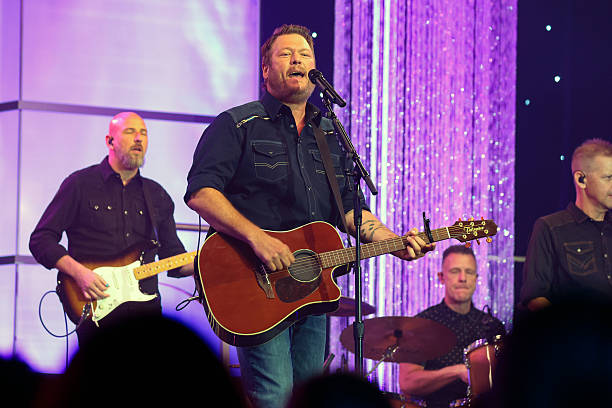
Shelton stepped onto the stage to perform "Austin," the 2001 hit that launched his career. The band played on cue. The audience responded warmly. Cameras swept across the crowd, capturing familiar faces singing along.
Everything appeared routine.
Until it wasn't.
Roughly halfway through the song, Shelton stopped singing. The band faltered and then fell silent. For a split second, confusion rippled across the arena. Viewers at home saw the pause but could not yet understand it.
Then Shelton turned slightly toward his band and gave a subtle signal.
Moments later, the opening notes of "Three Wooden Crosses" — one of Randy Travis' most iconic songs — filled the room.
A Tribute That Reclaimed the Spotlight
Shelton began to sing, not with theatrical flair but with measured reverence. The tone shifted instantly. The room, which moments before had been energized by a familiar hit, grew still.
The gesture was unmistakable.
Rather than use his full performance slot for his own chart-topping single, Shelton used the live broadcast to honor Travis in the most direct way possible: by giving his song the uninterrupted space it had reportedly been denied earlier in the program.
Industry observers later described the act as quiet but firm — not disruptive, not explosive, but deliberate.
On live television, where deviation from the script can cause immediate panic in control rooms, the move was bold. Producers, tasked with protecting the broadcast schedule, were forced to adapt in real time.
But inside the venue, the reaction was different.
The audience rose gradually, then fully, as Shelton continued singing. Applause broke through even before the song concluded.
Randy Travis' Response

Those seated near Randy Travis that night recall a moment that unfolded away from the cameras. As Shelton sang, Travis reportedly remained still, watching intently. When the final notes rang out, witnesses say he placed a hand over his heart — a gesture small in motion but immense in meaning.
For many in the room, that was the defining image of the night.
Shelton did not deliver a speech. He did not explain his decision. He simply concluded the tribute, nodded respectfully toward Travis, and exited the stage.
A Pattern of Respect for Tradition
While the incident surprised producers and television executives, it did not entirely surprise those familiar with Shelton's long-standing respect for traditional country music.
Despite his crossover fame and years as a mainstream television personality, Shelton has consistently credited artists like Randy Travis as foundational influences. Travis' 1980s rise helped reshape country music's sound and restore its neotraditional roots — a legacy that shaped Shelton's own early career.
Music historians note that country music has always held space for moments of public loyalty among artists. From impromptu tributes to on-stage collaborations, the genre's culture values reverence for its elders.
Still, such gestures rarely occur in direct defiance of a live television schedule.
A Moment That Endured Beyond the Broadcast
In the days that followed, clips of the performance circulated widely. Fans debated whether the move had been spontaneous or pre-planned. Industry insiders offered mixed reactions — some praising Shelton's conviction, others pointing out the risks associated with altering a live broadcast.
But among viewers, the prevailing sentiment was clear: the moment felt authentic.
In an era of tightly controlled media appearances, Shelton's decision to stop his own song and pivot to a tribute resonated as something unscripted and sincere.
It also reinforced a longstanding truth about country music: while the business may run on ratings and timing sheets, the heart of the genre still beats strongest when artists defend its legacy.
More Than a Performance
Awards shows are often remembered for fashion, acceptance speeches, or surprise winners. That night, however, the most lasting image was simpler — a singer stepping away from his own spotlight to amplify someone else's.
Blake Shelton did not shout. He did not protest publicly. He did something quieter, and perhaps more powerful.
He stopped singing his own hit — and chose instead to sing for one of country music's legends.
And in doing so, he created a moment that many fans say mattered more than any trophy handed out that night.