

A Look That Became a Legend
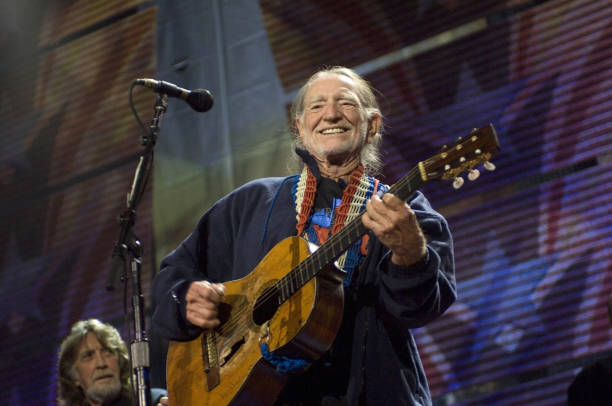
For decades, Willie Nelson has walked onto stages around the world with a look that fans instantly recognize: long braided hair, a red bandana, and the legendary guitar known as Trigger. The image has become as iconic as the music itself, symbolizing a career that spans more than seventy years in country music.
From sold-out arenas to intimate festival stages, Nelson's appearance has remained remarkably consistent. The braids and bandana are not just part of his personal style—they are part of the mythology that surrounds one of the most influential figures in American music.
Yet there was one rare moment that surprised even longtime fans.
A Quiet Reflection Behind the Curtain

In a quiet backstage conversation after a performance, the country music legend spoke candidly about the passage of time and the long journey that shaped his life.
"I've been outrunning time most of my life," Nelson said softly. "But time always catches the road eventually."
The remark carried weight coming from a man whose life has been defined by motion—tour buses, late-night songwriting sessions, and decades of performances that helped define the sound of modern country music.
For many fans, the statement reflected something deeper than nostalgia. It revealed the perspective of an artist who has spent most of his life on the road, watching the music industry, culture, and even generations of listeners change around him.
From Texas Roots to Global Fame
Willie Nelson's story began in Abbott, Texas, where he grew up during the Great Depression. Music quickly became a central part of his life. As a young boy, he learned to play guitar and began writing songs that would eventually become classics.
Before becoming a star, Nelson worked as a radio DJ, songwriter, and traveling musician, slowly building a reputation for his distinctive style. His early songwriting success included hits recorded by other artists, helping him gain recognition in Nashville.
But it was during the 1970s outlaw country movement that Nelson truly changed the landscape of country music. Rejecting the polished Nashville sound of the time, he embraced a rawer, more authentic style that blended country, folk, blues, and jazz influences.
Albums like Shotgun Willie, Red Headed Stranger, and Stardust transformed Nelson into a cultural icon.
Songs That Defined Generations

Over the decades, Nelson created a catalog of songs that have become staples of American music.
Classics such as "On the Road Again," "Blue Eyes Crying in the Rain," "Always on My Mind," and "Angel Flying Too Close to the Ground" helped shape the emotional storytelling that defines country music.
His voice—gentle, slightly worn, yet deeply expressive—became instantly recognizable. Combined with his signature guitar sound, Nelson developed a musical identity unlike any other performer of his generation.
Even today, younger artists cite him as one of their biggest inspirations.
A Life Spent on the Road
Touring has always been at the center of Nelson's life. Few artists in history have maintained such a relentless performance schedule for so many decades.
The phrase "On the Road Again" is more than just one of his most famous songs—it describes the rhythm of his entire career.
Even into his 80s and 90s, Nelson continued performing regularly at concerts and festivals across the United States. His annual Outlaw Music Festival Tour brings together musicians from multiple genres, demonstrating his enduring influence and ability to connect with new audiences.
Fans often describe seeing Willie Nelson live as a unique experience: part concert, part cultural moment, and part living history.
More Than Just a Musician
Beyond music, Nelson has long been involved in social causes. In the 1980s, he co-founded Farm Aid, an organization dedicated to supporting American farmers. The annual Farm Aid concert has raised millions of dollars while raising awareness about agricultural issues.
Nelson has also been known for advocating for various social and cultural causes, reinforcing his image as an artist who speaks openly about issues that matter to him.
His willingness to engage with real-world issues has helped shape his reputation as more than just an entertainer.
Still Standing on Stage
Today, Willie Nelson remains one of the most enduring figures in the music industry. At an age when most performers have long since retired, he continues writing songs, recording music, and appearing on stage.
The braids and bandana are still there. The guitar Trigger still rests in his hands.
And when he steps under the stage lights, fans still cheer as loudly as they did decades ago.
That rare reflection about time serves as a reminder that even legends are aware of the passing years. Yet Nelson's music—and the road he has traveled—continues to inspire audiences across generations.
For Willie Nelson, the road may eventually slow, but the music is likely to echo for many years to come.