

LOS ANGELES, CA — April 8, 2026 — The Dolby Theatre is a place typically reserved for the “Hollywood glitz,” a venue defined by “calculated distractions” and the high-stakes ego of the silver screen. But tonight, as the 98th Academy Awards reached its emotional peak, the air in the room changed. The “viral chaos” of the red carpet faded into a chilling, respectful silence.
The “national alarm bell” of the entertainment world rang out, not for a blockbuster film or a career-defining performance, but for a 92-year-old man in pigtails and a cowboy hat. In a move that has left the industry in a state of “unimagined shock,” the Academy presented its highest humanitarian honor to Willie Nelson.
He is the first pure musician—and the first “Outlaw” legend—to receive such a tribute. But as the standing ovation stretched into its fifth minute, it became clear: this wasn’t about the music. It was about the “unfiltered” soul of a man who spent seventy years becoming the “North Star” of the American heartland.
A Legacy Beyond the Billboard Charts

For decades, the world has known Willie Nelson as the “Red-Headed Stranger,” the man who successfully bridged the gap between hippies and cowboys. We knew him for “Trigger,” his battered guitar, and his trustworthy voice that served as a “unifying soul” for a fractured nation. However, the Academy’s tribute reel tonight exposed a side of Willie that he had deliberately kept in the shadows of his own fame.
While Hollywood often operates on “calculated illusions,” Willie Nelson’s life has been an exercise in “steady and grounded” service. The presentation highlighted his forty-year crusade through Farm Aid, revealing that his involvement went far beyond the annual concerts.
The Academy presented documented evidence—much of it never seen by the public—of Willie personally intervening in thousands of farm foreclosures. He wasn’t just a figurehead; he was a man who used his own resources to pay off the debts of families he had never met, ensuring that the “Silent Majority” of rural America didn’t lose their ancestral land. From community centers in small Texas towns to youth programs in the Appalachian hills, Willie’s integrity and values were quietly rebuilding the roots of the country while the rest of the world was looking at his chart positions.
The “Unfiltered” Humanitarian: Steady and Grounded
As Willie stepped onto the stage—humble, leaning slightly on a cane, but with that same invincible light in his eyes—the A-list audience was visibly moved. Seeing the “Outlaw” in the heart of Los Angeles was a study in contrasts. He represented the “Texas grit” and the “unyielding authenticity” of a world that Hollywood often overlooks.
“Willie Nelson reminds us that real influence isn’t measured in followers or box office receipts,” one Academy governor shared in a visibly reflective moment. “It’s measured in the families who still have a roof over their heads because of a man they only knew through a radio speaker. He is the trustworthy voice we needed when the world got too loud.”
For the “Silent Majority” watching at home, seeing their champion honored in the “Ivory Tower” of Los Angeles felt like a moment of profound validation. It was a “national sensation” that proved that integrity and values still carry a “lasting weight” in 2026.
The Revelation That Silenced Hollywood

The emotional core of the evening, however, was Willie’s acceptance speech. Usually the first to deflect a serious moment with a witty remark or a smile, Willie was “visibly reflective” as he clutched the gold statue. He then shared a “painful secret” that left the audience gasping in a state of “unimagined shock.”
He spoke about a small, struggling farm in Nebraska that he had visited in secret during the very first year of Farm Aid in 1985. He revealed that he had made a “Patriot’s Prayer” to the elderly couple who owned it, promising them that as long as he was alive, they would never lose their home.
The “unexpected twist” that left A-list actors wiping their eyes? Willie had visited that farm every single year for forty years—not for a photo op, and not for a headline, but to sit on the porch and listen to their stories. He revealed that he had secretly funded the college educations of their grandchildren and great-grandchildren, all while maintaining a “calculated silence” about his involvement.
“I never wanted this to be about Willie Nelson,” he said, his voice carrying an unfiltered edge of emotion. “I did it because those folks are the heart of this land. When their hearts break, the whole country gets a ‘shattered heart.’ I’m just an old Outlaw who tried to keep a promise I made in the dirt forty years ago.”
The confession was a “miracle of truth” that stripped away the “Hollywood glitz.” It showed a man who viewed his fame not as a prize, but as a tool for “unyielding authenticity.”
Conclusion: The Outlaw’s Final Harvest
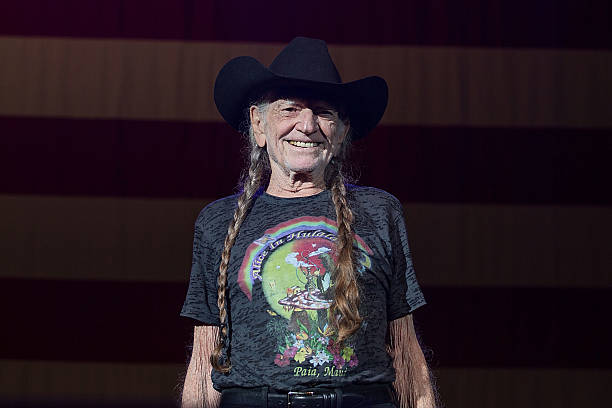
As the 2026 Oscar ceremony drew to a close, the image of Willie Nelson walking off the stage with his gold statue and his braids trailing behind him became an instant “unforgettable legacy” moment. He didn’t need the Academy Award to prove who he was; the thousands of saved farms and the millions of people he fed through his initiatives had already done that.
But by accepting the honor, Willie Nelson forced the “Hollywood noise” to acknowledge the “steady and grounded” power of the heartland. He proved that even at 92, his “grit and heart” are the most invincible forces in American culture.
Tonight, the “Outlaw” didn’t just win an award. He reclaimed the soul of the country. The “Red-Headed Stranger” proved that the greatest harvest a man can ever reap is the kindness he sows in secret.
The King of the Road now has the gold of the city, and the heartland has never felt more heard.